
Introduction
Publishing your first research paper in a Scopus-indexed journal is an important milestone in your academic journey. However, many first-time authors struggle with choosing the right journal, preparing a high-quality manuscript, understanding the peer review process, and avoiding common mistakes that lead to rejection.
This blog walks you through the complete Scopus publication process from selecting a journal to getting your paper accepted.
Develop a Publication Mindset Before You Begin
Many first-time authors focus only on completing their research, but successful publication starts much earlier. Before collecting data, researchers should consider whether their study addresses a meaningful research gap, offers a novel contribution, and aligns with the interests of reputable Scopus-indexed journals. Planning with publication in mind helps create a stronger foundation for the entire manuscript.
Demonstrate a Clear Research Contribution
A common misconception among first-time authors is that conducting a study is sufficient for publication. In reality, journals prioritise manuscripts that advance knowledge in a specific field. Authors should clearly explain how their findings differ from previous studies, address unresolved questions, or introduce new methods, theories, or applications. A well-defined contribution increases the manuscript’s originality and relevance.
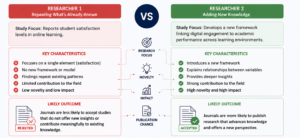
Example: Importance of Novelty
Two researchers investigate the same topic: online learning among university students. The first study merely reports student satisfaction levels, while the second introduces a new framework that explains how digital engagement influences academic performance across different learning environments. Although both studies use similar data collection methods, the second offers a stronger scientific contribution. Journals are more likely to publish research that advances knowledge rather than simply repeating existing findings
Understand Editorial Expectations Beyond Formatting
Editors assess much more than grammar and formatting. They evaluate whether the manuscript fits the journal’s scope, presents a compelling research question, follows a logical structure, and communicates its significance effectively. A well-written paper that lacks scientific value or journal relevance may still be rejected before reaching peer review.
Write for an International Research Audience
Scopus-indexed journals serve a global readership. First-time authors should avoid region-specific assumptions, unexplained abbreviations, or overly localised discussions. Instead, they should present their findings in a way that demonstrates broader scientific, practical, or societal relevance, making the research valuable to readers across different countries and disciplines.
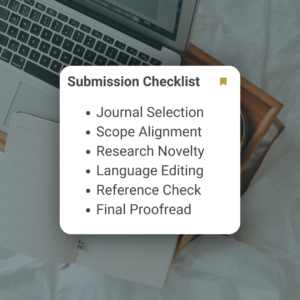
Tip to remember: Keep a Submission Checklist
Many first-time authors lose valuable time because of avoidable submission errors, such as incorrect reference formatting, missing ethical statements, or low-resolution figures. Create a personal submission checklist that includes formatting, plagiarism review, language editing, figure quality, supplementary files, and journal-specific requirements. Completing this checklist before submission reduces the risk of desk rejection and ensures a smoother editorial process.
Build a Strong Scientific Narrative
A successful manuscript is more than a collection of sections—it tells a coherent scientific story. Each part of the paper should naturally connect to the next, with the introduction defining the problem, the methodology explaining the approach, the results presenting evidence, and the discussion interpreting the findings. A clear narrative helps readers understand the purpose and impact of the research.
Learn to Evaluate Journals Strategically
Selecting a journal should involve more than comparing impact factors or quartile rankings. Authors should examine recently published articles, identify recurring research themes, assess the journal’s audience, and determine whether their manuscript aligns with the journal’s editorial priorities. Strategic journal selection significantly improves the likelihood of successful publication.
Prepare for the Peer Review Process
Peer review is an opportunity to strengthen a manuscript rather than simply an evaluation stage. Reviewer comments often highlight areas where the research can be clarified, expanded, or better supported. First-time authors who approach revisions with a constructive mindset are more likely to improve both the quality of their manuscript and their future publishing skills.
Improve Research Visibility After Publication
Publishing a paper is only the beginning of the research dissemination process. Authors should actively increase the visibility of their work by maintaining updated researcher profiles, sharing publications through academic networks, and engaging with the wider research community. Greater visibility can enhance citations, foster collaborations, and increase the overall impact of the research.
Prioritize Research Integrity Throughout the Publication Process
Maintaining ethical standards is essential for successful academic publishing. Authors should ensure accurate citation practices, transparent reporting of methods and results, proper authorship attribution, and responsible use of AI-assisted writing tools where permitted. Demonstrating research integrity strengthens the credibility of both the manuscript and the researcher.
Conclusion
For first-time authors, publishing one paper should be viewed as the beginning of a broader research career rather than a single achievement. Developing consistent writing habits, learning from reviewer feedback, collaborating with experienced researchers, and continuously improving research quality can establish a strong publication record and contribute to long-term academic success