
Introduction
Publishing a research article in a Scopus-indexed journal is a significant milestone for researchers, academicians, and students. It not only validates the quality of research but also enhances academic visibility, career growth, and opportunities for collaboration. However, the journey from a research idea to a published paper is often challenging, requiring careful planning, ethical research practices, and perseverance. Understanding each stage of the publication process can help authors avoid common mistakes and improve their chances of acceptance.
The Foundation: Developing a Research Idea
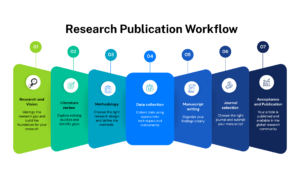
Every successful publication begins with a meaningful research question. Researchers should identify a gap in the existing literature and formulate objectives that contribute novel insights to their field. A strong research idea should be original, relevant to current scientific challenges, feasible within available resources, and supported by existing literature. Before beginning the study, conducting a comprehensive literature review is essential for understanding the current state of research, identifying knowledge gaps, and selecting the most appropriate methodology. A well-defined research question forms the basis of a successful manuscript and guides every stage of the research process.
Designing a Strong Research Methodology
The credibility of any manuscript depends largely on the quality of its research methodology. Researchers should carefully select an appropriate research design that aligns with their objectives, whether experimental, survey-based, qualitative, mixed-methods, systematic review, or meta-analysis. The methodology should clearly explain participant selection, sampling methods, data collection procedures, research instruments, statistical analyses, software used, and ethical considerations. Transparent and detailed reporting enhances the reproducibility of the research and increases the confidence of reviewers and readers in the study’s findings.
Ethical Approval and Research Integrity
Research ethics are fundamental to scholarly publishing. Studies involving human participants or animals generally require approval from an Institutional Review Board (IRB) or Ethics Committee before data collection begins. Researchers should ensure that informed consent is obtained from participants, confidentiality is maintained, personal data are protected, and all research activities comply with institutional and international ethical standards such as the Declaration of Helsinki. Maintaining honesty in data collection, analysis, authorship, and reporting while avoiding plagiarism, fabrication, and conflicts of interest demonstrates research integrity and strengthens the credibility of the publication.
Organizing the Manuscript
A well-organised manuscript improves readability and increases the likelihood of a favourable editorial decision. Most journals follow the IMRaD structure, consisting of the Introduction, Materials and Methods, Results, and Discussion. The title should be concise, informative, and contain relevant keywords that accurately reflect the study. The abstract should summarise the background, objectives, methodology, key findings, and conclusions clearly and concisely. Keywords should be carefully selected to improve discoverability in academic databases. The introduction should provide background information, review relevant literature, identify research gaps, and state the research objectives. The methodology section should provide sufficient detail to enable replication of the study. Results should present findings objectively using appropriate tables, figures, and statistical outputs without interpretation. The discussion should interpret the findings, compare them with previous studies, acknowledge limitations, and suggest future research directions. The conclusion should summarise the major contributions and practical implications of the research without introducing new information.
Tips to remember: Before submission, compare your manuscript with 3–5 recently published papers from the target journal to match its writing style, structure, and expectations.
Selecting the Right Scopus Journal
Choosing an appropriate Scopus-indexed journal is one of the most critical decisions in the publication process. Researchers should evaluate the journal’s aims and scope, indexing status, CiteScore, SCImago Journal Rank (SJR), Source Normalised Impact per Paper (SNIP), review timelines, publication policies, and article processing charges. Submitting a manuscript to a journal whose scope closely aligns with the research topic significantly improves the likelihood of successful peer review and publication. Reading recently published articles from the target journal can also provide valuable insight into the type of research the journal prefers.
Preparing the Submission
Before submitting the manuscript, researchers should ensure that every journal requirement has been fulfilled. The manuscript should follow the prescribed formatting guidelines, references should be correctly styled, figures and tables should meet technical specifications, and all required supporting documents should be prepared. Depending on the journal, these may include a cover letter, graphical abstract, highlights, author contribution statement, ethics statement, funding declaration, conflict of interest statement, and supplementary files. Careful preparation minimizes technical revisions and demonstrates professionalism during the submission process.
Editorial Screening
Following submission, the editorial office performs an initial assessment to determine whether the manuscript is suitable for peer review. Editors evaluate whether the manuscript falls within the journal’s scope, demonstrates sufficient originality, complies with ethical standards, meets formatting requirements, and contains acceptable language quality. Similarity checks are commonly performed to detect plagiarism or excessive text overlap. Manuscripts that satisfy these requirements are forwarded for peer review, while others may be returned for technical corrections or rejected at the editorial stage.
Peer Review Process
Peer review is a critical component of scholarly publishing that ensures the scientific quality and reliability of published research. Independent experts evaluate the originality, methodology, statistical analyses, clarity of presentation, practical significance, and overall contribution of the manuscript. Based on reviewer recommendations, editors may accept the manuscript, request minor or major revisions, invite resubmission after substantial revision, or reject the manuscript. Authors should carefully consider reviewer comments and use them to strengthen the quality of their research and presentation.
Revising the Manuscript
Receiving reviewer comments is a normal part of the publication process. Authors should prepare a detailed response document that addresses every reviewer comment individually and clearly explains the revisions made in the manuscript. Responses should remain professional, respectful, and evidence-based, even when authors disagree with certain suggestions. Well-prepared revisions often improve the quality of the manuscript considerably and increase the likelihood of eventual acceptance.
Acceptance and Production
Once the manuscript is accepted, it enters the production stage. During this phase, professional editors perform copyediting, typesetting, proofreading, and formatting before assigning a Digital Object Identifier (DOI) and publishing the article online. Authors are typically provided with page proofs to review and approve before final publication. Careful proofreading at this stage ensures that any remaining typographical or formatting errors are corrected before the article becomes part of the permanent scientific record.
Increasing Research Visibility
Publication marks the beginning rather than the end of a researcher’s scholarly journey. To maximize the impact of their work, researchers should actively promote their publications through academic networking platforms, institutional repositories, professional conferences, and researcher profiles such as ORCID and Google Scholar. Sharing research findings with the broader scientific community increases visibility, encourages collaboration, and often leads to higher citation rates. Active dissemination ensures that valuable research reaches the audiences who can benefit from its findings.
Common Reasons for Manuscript Rejection
Manuscript rejection is a common experience in academic publishing and should be viewed as an opportunity for improvement rather than failure. Common reasons include poor journal selection, insufficient novelty, weak research methodology, inadequate statistical analysis, language issues, ethical concerns, plagiarism, unsupported conclusions, and failure to follow journal guidelines. Careful planning, thorough manuscript preparation, and adherence to journal requirements can significantly reduce the risk of rejection.
Conclusion
The journey from manuscript preparation to publication in a Scopus-indexed journal is both challenging and rewarding. Success depends on conducting rigorous research, maintaining ethical standards, selecting an appropriate journal, preparing a well-structured manuscript, and responding thoughtfully to reviewer feedback. Each stage of the publication process plays a crucial role in transforming research into a valuable scholarly contribution. With careful planning, persistence, and a commitment to research excellence, authors can successfully navigate the Scopus publication journey and make lasting contributions to the global scientific community.